Where chia comes from
Long before anyone called it a super-food, chia was a farm crop, a tax payment and an everyday meal in ancient Mexico. Here's how it got from there to your kitchen.

How a seed
outlasts an empire
An empire rose and fell around it, and the seed kept going. Here's the story in five chapters, from a wild plant in the highlands to the bag in your cupboard.
- Origin
A sage, not a grain
Chia is Salvia hispanica, a sage and part of the mint family. It grows wild in the highlands of central and southern Mexico and Guatemala, and that's where farmers first turned it into a crop. Nobody knows exactly when — the seeds are small, soft and oily, so they rarely last in the ground long enough for archaeologists to find. The name comes from chian, a word in Nahuatl, the Aztec language, that means "oily." You'll also hear chia called the Mayan word for strength, and we love that one too.
- Before 1521
Food, oil and taxes
By the time of the Aztec Empire, chia was one of the region's main crops, grown beside maize, beans and amaranth. People stirred it into drinks and porridge, pressed it for oil to make paint and a glossy finish for gourds and pottery, and used it in medicine. They offered it to Chicomecóatl, the goddess of crops, too. The Aztec state collected chia as tribute, a kind of tax, and the Codex Mendoza shows bins of it arriving every year from more than a dozen provinces.
- After 1521
Pushed to the edges
The Spanish conquest changed what Mexico grew. Wheat and barley took over many fields, the population collapsed, and chia's part in religious ceremonies gave the new rulers a reason to discourage it. But chia never disappeared. Farmers in the highlands of western Mexico and Guatemala kept planting it in small plots, year after year, for more than four centuries.
- Early 1990s
Back in the field
In the early 1990s, two University of Arizona researchers, Ricardo Ayerza and Wayne Coates, started growing chia in northwestern Argentina as a new crop for local farmers. They worked out how to plant, harvest and clean it at scale, and the system Coates developed is still how chia is harvested commercially today.
- Today
Grown around the world
Chia is now farmed 23 degrees north and south of the equator. A crop that spent four hundred years in a few highland fields is back on kitchen shelves everywhere.
It lasted because it stayed useful
A food doesn't last this long by accident. Dry chia keeps for a long time without refrigeration, it's light to carry, and you can eat it without milling or cooking. Soak it and it turns to a soft gel, which made it easy to stir into drinks and porridge. Those are the same reasons it fits so easily into a kitchen today.
The seed is ancient. What we do with it isn't: we open it cold, without heat, and that's a story of its own.
An ancient seed,
opened cold
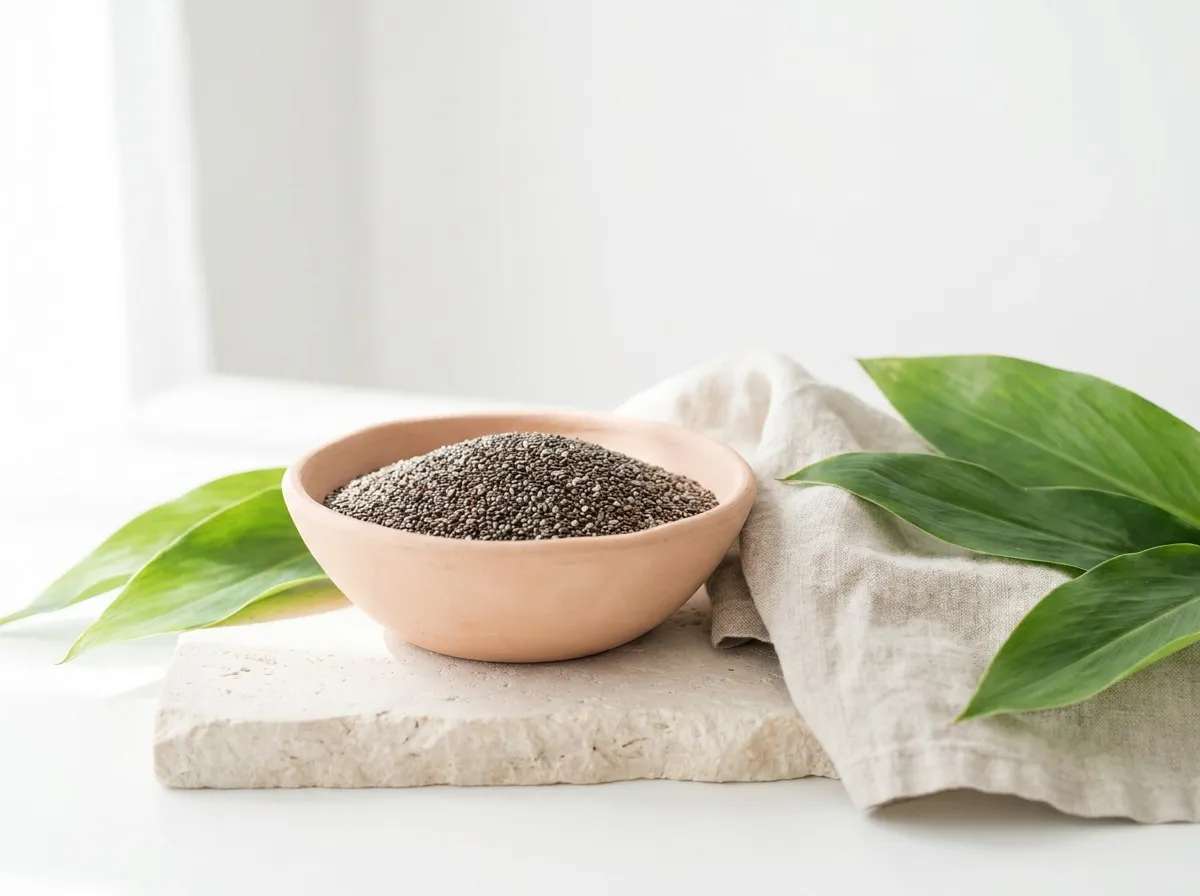
E'LAN is the same chia people have grown for centuries. The only modern part is how we open it, after the harvest.